DPA Microphones
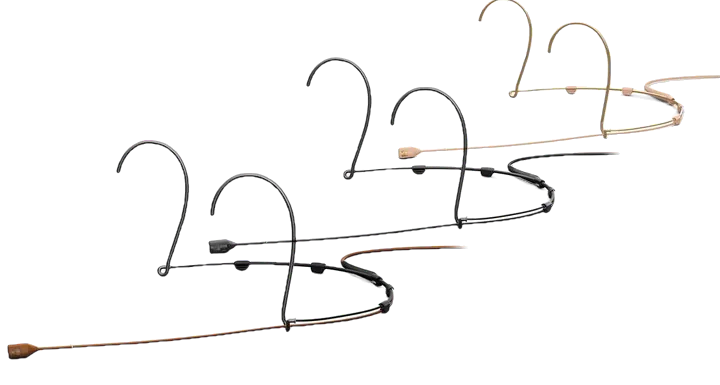
DPA 4088
Miniature cardioid condenser headset (pre-polarised, 5.4 mm) for speech and vocals, CORE+ electronics
Approximate Some readings for this mic are uncertain; see the graphs.
Power Wireless systems: 5 to 10 V through a DPA adapter; with the DAD9001 XLR adapter: P48 (works from 12 V).
- Type
- Condenser (electret)
- Pattern
- Cardioid
- Sensitivity
- −44 dBV/Pa
- Among 311 mics: more output than 44%
- Self-noise
- 26 dB(A)
- Among 272 mics: quieter than 8%
- Max SPL
- 139 dB SPL
- Among 343 mics: takes louder sound than 53%
- Rated range
- 20 – 20k Hz
vs 204 condensers
More output than 20% of 204 condensers.
Each stripe is one condenser with a published sensitivity, and each bar counts them; further right means more output. This mic is in blue.
vs 258 condensers
Quieter than 8% of 258 condensers.
Each stripe is one condenser with a published self-noise, and each bar counts them; further right means quieter. This mic is in blue.
vs 277 condensers
Takes louder sound than 58% of 277 condensers.
Each stripe is one condenser with a published max SPL, and each bar counts them; further right means it takes louder sound. This mic is in blue.
Instruments sources recommend it for most
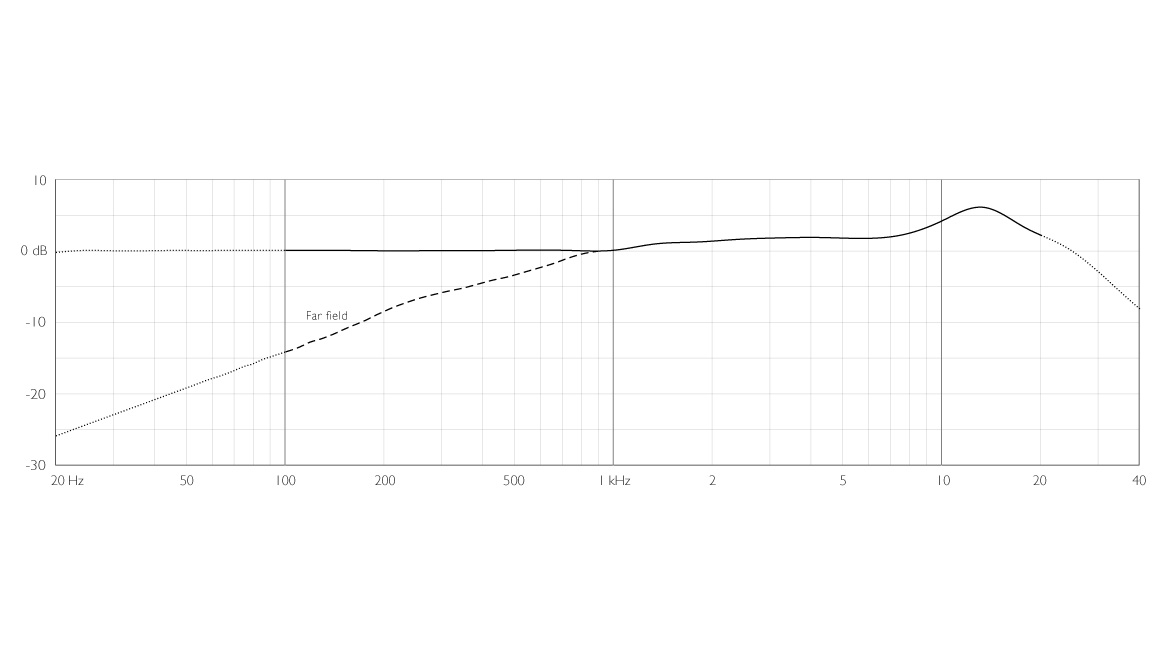
Proximity effect: the bass it gains up close
From the near far image.
Captioned (on the product page) "Frequency response of the 4088 in near and far field"; the distances are not stated (the main graph gives 2-3 cm for near field). The far-field line is drawn dashed from 100 Hz to where it meets the near-field line (about 900 Hz) and dotted below 100 Hz; above that the two are one line.
Dashed: outside the rated range, or simulated (other angles and distances). Hover or tap the graphs for values.
Polar pattern
From the polar image. Approximate
Captioned (on the product page) "Typical directional characteristics of a 4088"; 5 dB per ring, centre -25 dB. Measuring conditions not stated.
Approximate: reading error up to about 1 dB; some frequencies are identified by reasoning, not by the legend: 500 Hz.
In practice
All specs
| From the product page | ||
|---|---|---|
| Capsule | Pre-polarised miniature capsule, 5.4 mm"Microphone diameter: 5.4 mm (0.21 in)"; "Microphone length: 11 mm (0.5 in)". | |
| Sensitivity | −44 dBV/Pa (6 mV/Pa)nominal, ±3 dB at 1 kHz. "6 mV/Pa; -44 dB re. 1 V/Pa". | |
| Self-noise | 26 dB(A)typ. (max. 28 dB(A)) | |
| Self-noiseCCIR 468 | 38 dBITU-R BS.468-4, typ. (max. 40 dB) | |
| Max SPL | 139 dB SPLTHD < 1%, RMS (CORE+); also 142 dB SPL, THD < 1%, peak; also 137 dB SPL, THD < 0.5%, RMS; also 146 dB SPL, THD 10%, peak; also 134 dB SPL, THD < 1%, RMS (CORE; 2024 print); also 120 dB SPL, THD < 1%, RMS (Legacy, before CORE; 2024 print). "Distortion, THD < 0.5%: 137 dB SPL RMS, 140 dB SPL peak"; "Distortion, THD < 1%: 139 dB SPL RMS, 142 dB SPL peak"; "Max. SPL, THD 10%: 146 dB SPL peak". The 2024 print gives 134/137 dB (CORE), 120/123 dB (Legacy) and 144 dB peak at 10% (p. 2). | |
| Dynamic range | 116 dBtyp. (CORE+); also 111 dB, typ. (CORE; 2024 print); also 97 dB, typ. (Legacy; 2024 print). The 2024 print gives "Dynamic range - CORE: Typ. 111 dB" and "- Legacy: Typ. 97 dB" (p. 2). | |
| Output impedance | 35 ohmrated, printed as "30 - 40 Ω". Not stated by the manufacturer: "Rated output impedance: 30 - 40 Ω"; the value is the middle of that range. | |
| Rated frequency range | 20 Hz to 20 kHz"Frequency response: 20 Hz - 20 kHz". The 2024 print adds "Effective frequency range, ±2 dB, Near field 2-3 cm: 100 Hz - 20 kHz (4 - 6 dB soft boost at 15 kHz)" (p. 2). | |
| Powering | Wireless systems: 5 to 10 V through a DPA adapter; with the DAD9001 XLR adapter: P48 (works from 12 V)"For wireless systems Min. 5 V - max. 10 V through DPA adapter. With DAD9001: P48 (Phantom Power). Will work from 12 V". | |
| Current draw | 1.5 mAtyp., microphone; also 3.5 mA, with the DAD9001 XLR adapter | |
| Connector | MicroLock, TA4F Mini-XLR, 3-pin LEMO or Mini-Jack (for wireless packs); XLR through the DAD9001 adapter"Connector: MicroLock, TA4F Mini-XLR, 3-pin LEMO, Mini-Jack". The 2024 print names MicroDot instead of MicroLock and the DAD6001-BC adapter. | |
| Weight | 14 gincl. cable and MicroLock connector | |
| Dimensions | 5.4 × 11 mmMicrophone (capsule housing) diameter 5.4 mm, length 11 mm. Cable 1.2 m long, 1.6 mm thick. | |
| Cable | 1.2 m (3.9 ft), 1.6 mm (0.06 in) diameter | |
| Cable drive capability | Up to 300 m (984 ft) with the DAD9001 XLR adapter | |
| Polarity | Positively increasing sound pressure produces positive going voltage on the MicroLock pin | |
| Temperature range | -40 °C to 45 °C | |
| Relative humidity | Up to 90% | |
| From the spec sheet | ||
| Finish | black, beige or brown"Color: Black, beige or brown". | p. 2 |
| Effective frequency range | ±2 dB, near field 2-3 cm: 100 Hz - 20 kHz (4 - 6 dB soft boost at 15 kHz) | |
| Versions | CORE+ (current, MicroLock); the 2024 print gives CORE and Legacy figures (MicroDot) | |
Documents
- 4088 CORE+ Directional Headset Microphoneproduct page specifications
- 4088 Directional Headset MicrophoneDPA document portal print
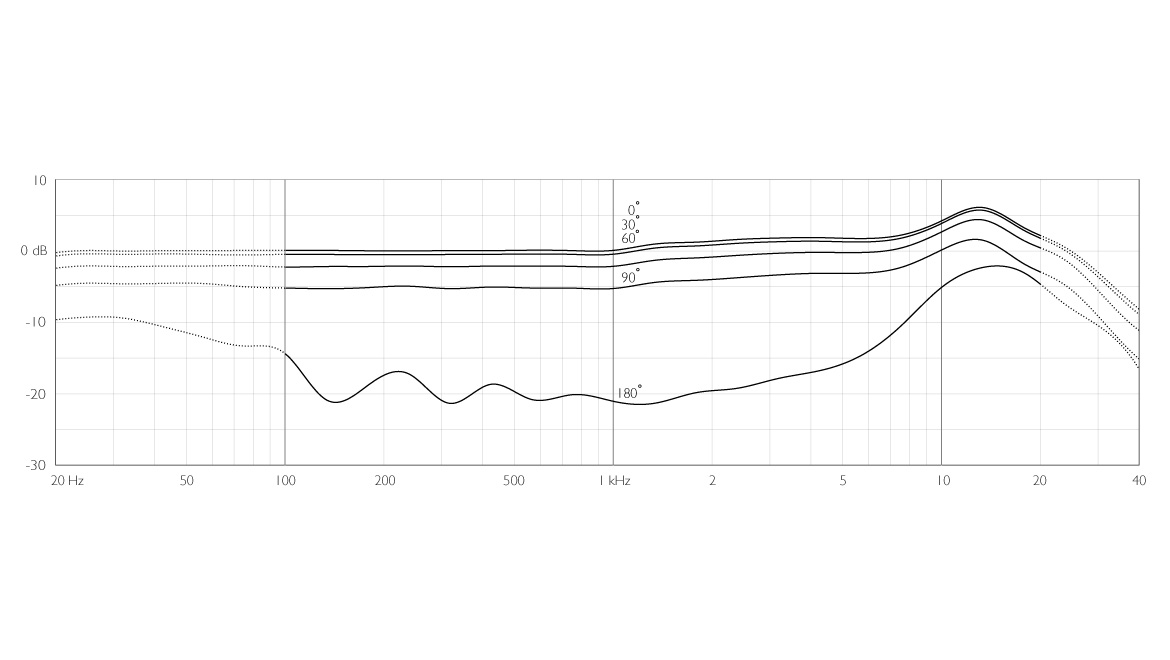
- Typical on and off-axis response of a 4088 microphonegraph image
- Frequency response of the 4088 in near and far fieldgraph image
- Typical directional characteristics of a 4088graph image

Copies kept by Mic Archive (manufacturers move and drop their documents). Each is © DPA Microphones, unchanged, with its original address.
Recommended for
By recording guides, engineers and mic makers, for this mic or an earlier version of it.